

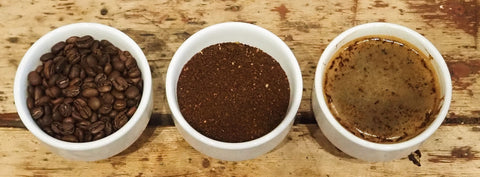
Cupping is the art of coffee tasting. This meticulous and carefully controlled tasting allows one to understand and appreciate all the olfactory and gustatory qualities of one or more selected coffees. It is therefore a highly relevant process for a roaster, a coffee expert, or anyone else involved in the coffee trade.
More and more, clients are curious to learn more about the cupping experience. How does cupping work? You need to have a basic objective in mind.
Here are some examples:
- discover several different coffees, origins or blends
- to compare different terroirs of the same origin
- to compare the same variety from different origins
- compare different degrees of roasting (cooking)
- compare the same mixture, but in different proportions for each origin included
Cupping is a ritual similar to wine tasting. There are certain rules to follow to ensure a quality experience and accurate results. The goal is often to discover new favorites, assess the quality of the products, or make exciting new discoveries!
To begin the tasting, here is the necessary equipment:

- freshly roasted coffee beans
- tasting cups
- tasting spoons
- a spittoon
- a scale
- a kettle
- a mill
- a glass of rinsing
- hot water between 90 and 95 degrees Celsius
- container for grains
The stages of cupping
-
grind the coffee and smell the coffee
Grind 14 grams of each coffee you wish to taste into each tasting bowl. The grind should be fairly coarse, similar to a filter grind. Take your time to fully appreciate the aromas while dry.
-
wet and smell the coffee again
Pour the water at the correct temperature over the ground coffee in a circular motion, filling the bowl to the brim. You will see a crust form on the surface. Set a timer for 4 minutes and take the time to smell the coffee near the bowl. The aromas when dry and when wet can be quite different.
-
to eat a bite while still smelling
After the 4-minute steeping time, you'll need to break up the crust (the surface of the brew) with your spoon. Using the back of the spoon, make small upward waves, keeping your nose close to the bowl to inhale the aromas. Then, with a second spoon, to cover a larger area, remove all the crust from the surface of your tasting bowls.
-
wait for it to cool down
It's important to wait about 6 to 7 minutes before tasting. If you burn yourself, you won't be able to taste anything afterward. Also, if your coffee is too hot, you won't be able to fully appreciate the different aromas. It's better to taste it lukewarm than piping hot.
-
enjoy
Using a spoon, scoop some coffee from the surface of the bowl and quickly draw it up, drawing air into your mouth at the same time. You should hear the characteristic slurping sound of cupping. This tasting technique is called retronasal olfaction and will help you perceive the aromas more clearly in your mouth. After each use, rinse your spoon thoroughly in a rinsing glass to prevent flavors and aromas from mixing between bowls. When tasting several coffees, it's important to taste them multiple times, at least three times, because the aromas continue to evolve as they cool.
Some people prefer to cup wine in silence, or at least without commenting on their olfactory and gustatory perceptions to the other participants. The silence helps prevent being influenced by others during the cupping process, allowing you to see if a few people around the table truly share the same perceptions. If so, it would mean you've likely found the tasting notes! Your first cupping session might leave you a little perplexed. Give yourself time to develop your palate; it's an exercise that requires practice to be able to accurately differentiate the aromas of different terroirs.

SARAH-EVE ,
Expert barista, trainer & blogger. Meet Sarah-Ève every day of the week at our Limoilou location!
Discover his story here...
.


Comments (0)
There are no comments for this article. Be the first one to leave a message!